
Timber Flooring Trends in NSW and How to Choose the Right Australian Timber
Timber flooring has been part of NSW homes for well over a century, from terraces in Sydney's inner west to weatherboard cottages on the coast and farmhouses out on the tablelands.
What's changing is how people choose it. Homeowners, builders and designers are paying closer attention to where their timber comes from, how it looks in natural light and how it ties in with the rest of the home.
This guide looks at the timber flooring trends shaping NSW homes right now, what to weigh up when choosing an Australian timber and where you can see reclaimed Tasmanian Myrtle flooring in person.

What's shaping timber flooring choices in NSW
A move back to Australian timber
Imported European Oak had a long run as the go-to for engineered floors. More buyers are now turning to Australian-grown species for their local character and the way they sit in Australian light and landscapes. Flooring specialists see it as part of a wider interest in local design identity, with people wanting materials that feel like they belong here.
Lighter palettes, with warmth creeping back in
Richer timber is finding its way back into interiors after a decade of pale, pared-back finishes. Completehome notes that cool, pale finishes are “steadily giving way to warmer, more grounded tones”, with mid-to-deep browns being reintroduced as a base for modern homes.
Designers are seeing the same shift in furniture, with Alexis Vitale of Vitale Design Group telling Homes & Gardens that “warmer wood tones are back, whereas lighter wood tones are starting to lose their influence in the market.”
Warmer timber is showing up underfoot as well as in joinery, wall linings and furniture, giving rooms more depth without losing the brightness of a lighter palette.
Natural, matte finishes
High-gloss coatings are giving way to matte and satin finishes, natural oils and lightly brushed textures that let the grain do the talking. The result feels softer underfoot and more relaxed in the room.
Wider boards and patterned layouts
Wider boards make a room feel calmer and more open, while herringbone and chevron layouts are being used to mark out entries, dining spaces and studies within open-plan homes.
Renovating older homes
Plenty of NSW projects involve extending or matching existing floors in mid-century and late-modern homes. Choosing a species and finish that sits comfortably beside original boards can matter just as much as following a trend.
Provenance matters more
Buyers increasingly want to know where their timber comes from and whether its sourcing can be independently verified. Certification such as PEFC gives homeowners confidence and makes life easier for builders and specifiers documenting a project.
Timber beyond the floor
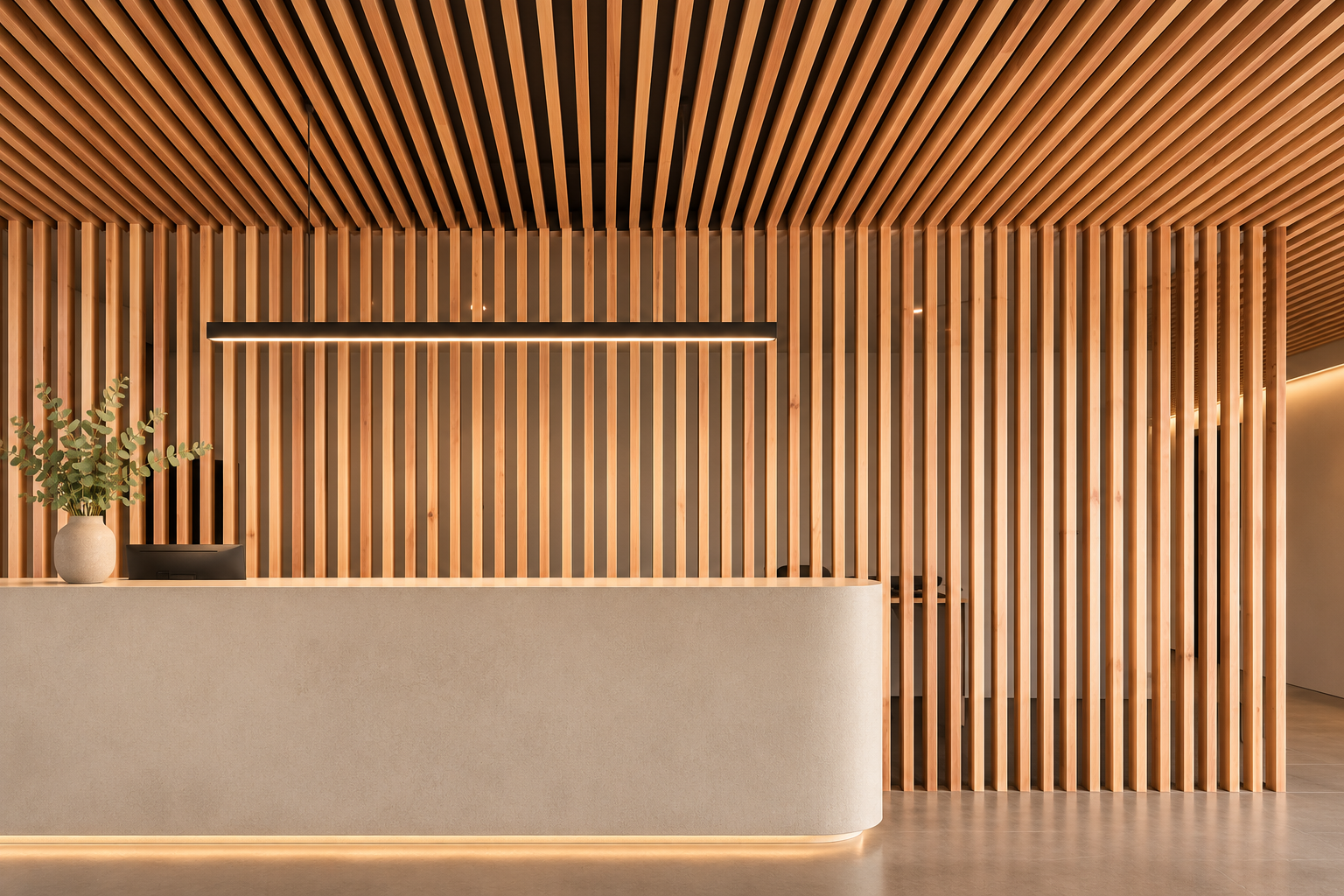
Timber is moving up the walls and across ceilings, with linings, battens and joinery used to build one consistent material palette from floor to ceiling.
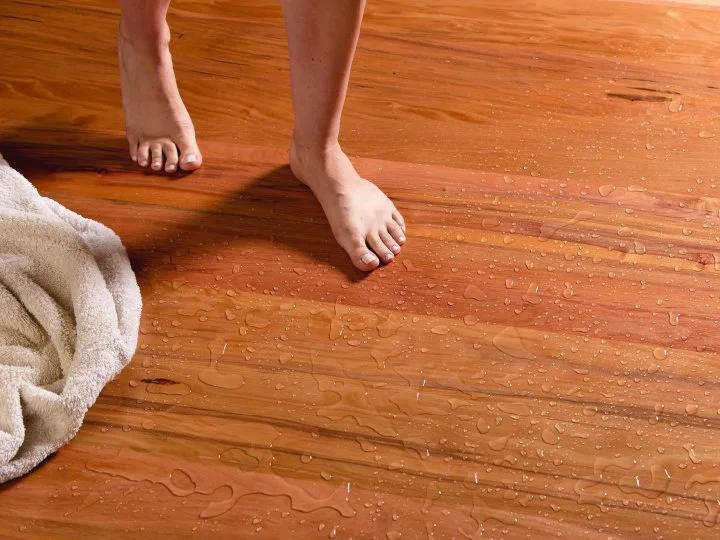
Hydrowood Myrtle flooring.
How to choose an Australian timber for your floor
When comparing timber floorboards, it helps to look at five things together.
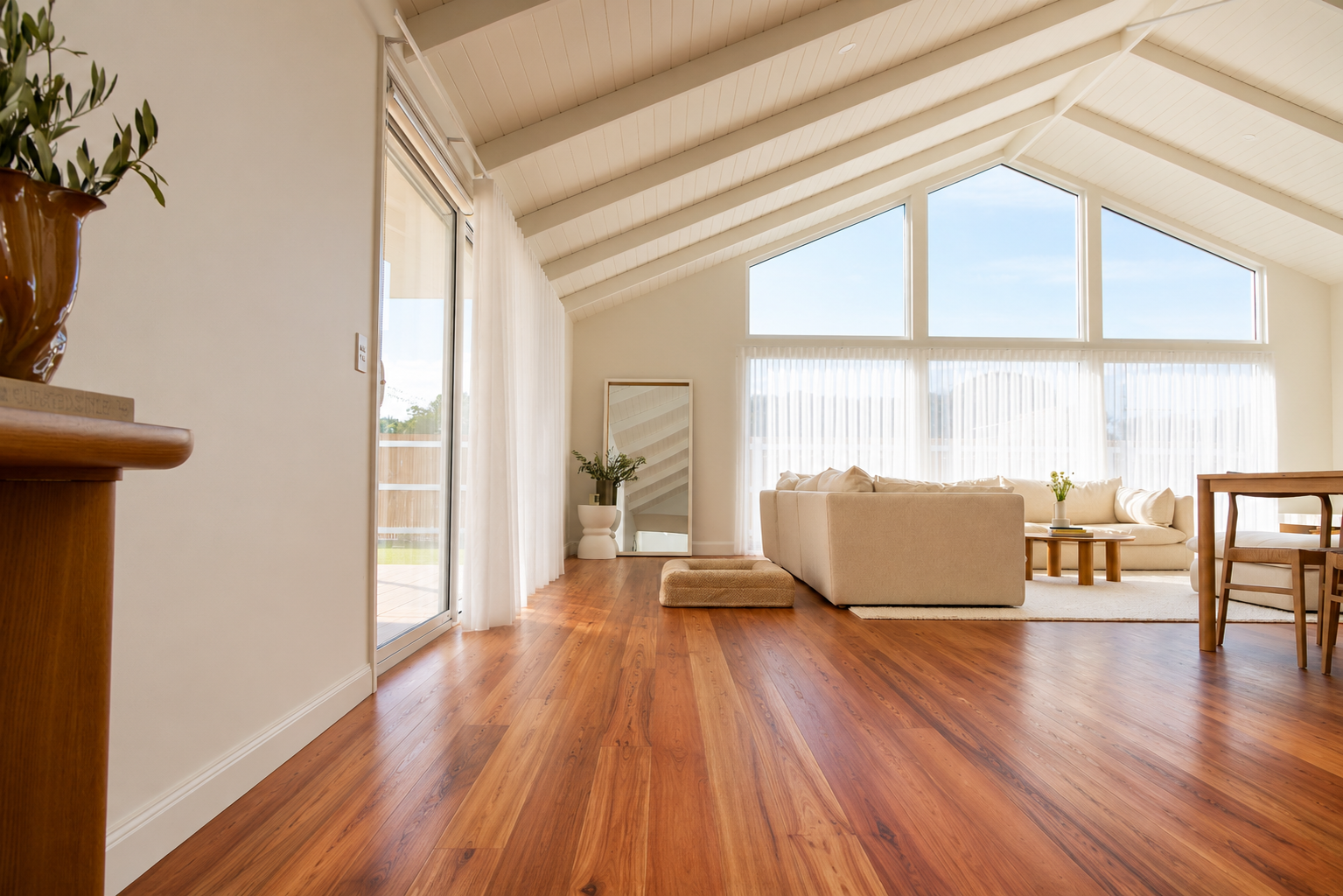
Colour: Australian timbers run from pale straw and blonde tones through warm honey and golden browns to deep reds and rich chocolate. Colour sets the tone for the whole room, so look at samples in your own light.
Grain and figure: Fine, even grain reads calm and refined, while figured boards bring more movement and character.
Hardness: Measured on the Janka scale. Harder timbers resist dents in high-traffic areas, while moderately hard timbers suit living areas and bedrooms well with sensible care.
Board width and layout: Standard widths, wideboards or a patterned layout like herringbone all change how a space feels.
Provenance: Where the timber came from and whether it carries independent certification.
Planning for NSW conditions
NSW covers everything from humid coastline to cold, dry tablelands, and timber responds to moisture in the air, so local conditions are worth planning for.
Coastal homes from the Northern Rivers to the South Coast see higher humidity for much of the year, so boards can take up moisture and expand slightly. Proper expansion gaps around each room are important.
Tablelands and highlands homes see cold winters and the heating that comes with them, which dries the air indoors and can open small gaps between boards in the cooler months.
A few simple steps help wherever you are.
Let boards acclimatise on site before they are laid, following your installer's advice.
Ask your installer to check the moisture content of both the boards and the subfloor.
Keep good ventilation under suspended floors, especially in coastal and older homes.
Choose a finish suited to how each room is used, from hard-wearing coatings in kitchens and hallways to natural oils in quieter spaces.
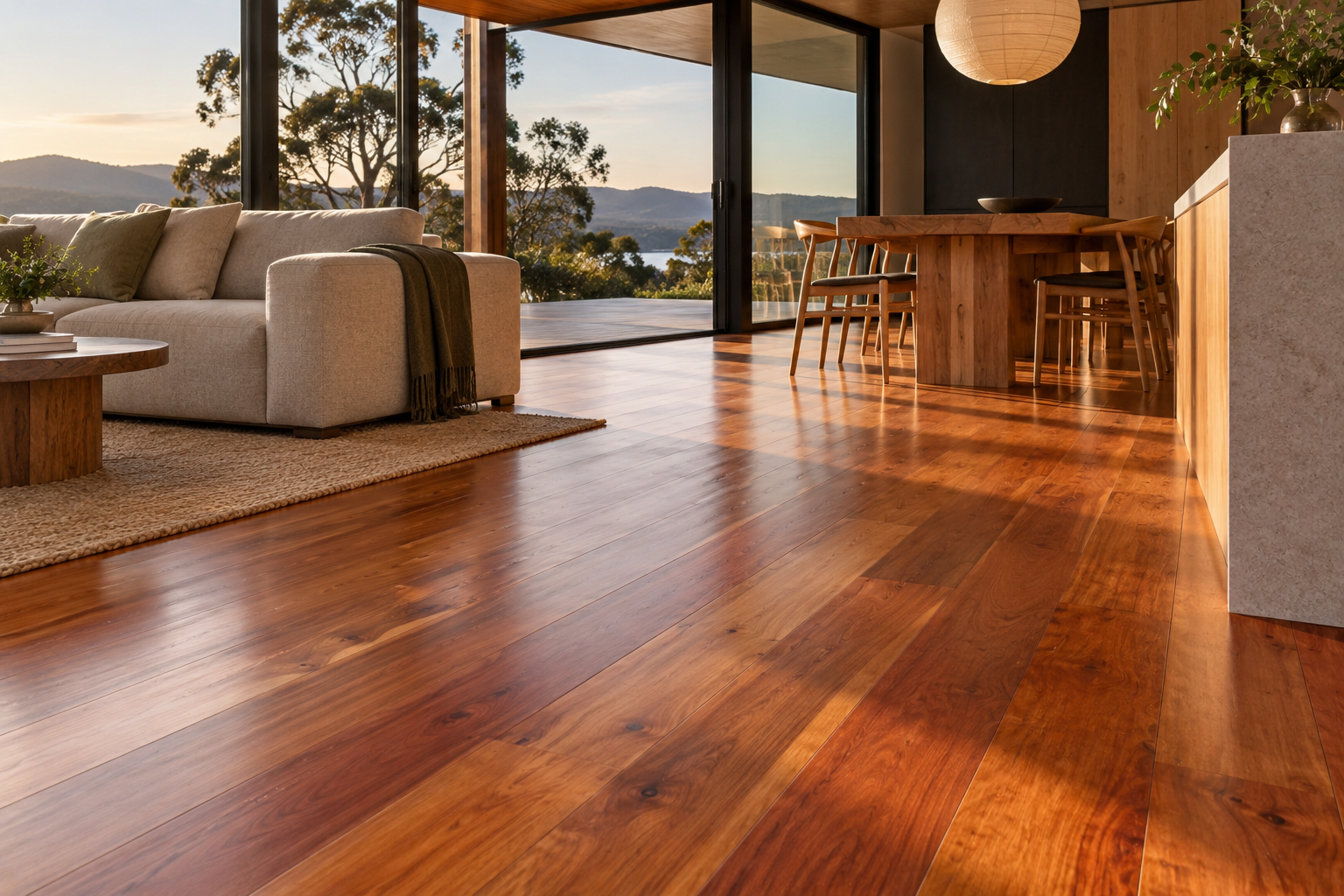
Tasmanian Myrtle flooring, a distinctive Australian alternative
For anyone who loves the idea of Australian timber but wants something less familiar than Blackbutt or Spotted Gum, Tasmanian Myrtle is worth a close look. It ranges from pale pink through to a deep red-brown, with a fine, even grain and occasional wavy or fiddleback figure that catches the light as you move through a room. Paler boards sit comfortably within today's lighter palettes, while richer boards bring the warmth designers are adding back into interiors.
A few technical notes for builders and designers:
Seasoned density of approximately 700 kg/m³
Janka hardness of 5.9 kN
Works well for sawing, moulding, sanding and coating
Myrtle is a moderately hard timber, softer than species like Spotted Gum. It suits living rooms, bedrooms, studies and low to medium traffic spaces beautifully, and felt pads under furniture and rugs in busy zones will keep it looking its best. Its fine grain also takes a matte or natural oil finish particularly well.
See Myrtle flooring for yourself. Photos only go so far with timber. Visit your nearest Gubbins Mitre 10 to see Hydrowood Myrtle flooring and lining in person and talk through your project with the team.
Reclaimed timber flooring with genuine provenance
Hydrowood timber is recovered, not harvested. It comes from forests submerged when Tasmania's hydro-electric dams were built, brought back to the surface decades later.
That makes Hydrowood a reclaimed and responsibly sourced Tasmanian timber, independently certified through PEFC and Responsible Wood chain-of-custody systems. For homeowners it means a floor with a story behind every board. For specifiers it means clear, verifiable sourcing that is easy to document on a project.
Carrying timber from floor to ceiling
If you're following the move toward whole-room timber palettes, Hydrowood Myrtle lining can carry the same warmth up a feature wall or across a ceiling, while Celery Top Pine battens add texture and rhythm to walls, screens and joinery. Using Tasmanian timbers together creates a consistent, considered look throughout the home.
See Hydrowood timber at Gubbins Mitre 10 in NSW
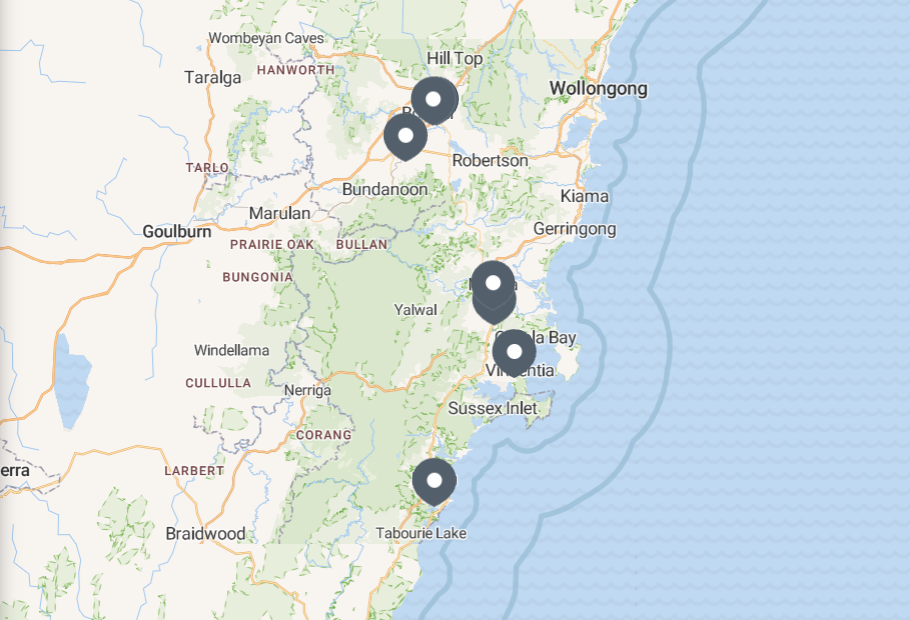
Hydrowood reclaimed Tasmanian timber is now stocked across seven Gubbins Mitre 10 stores in the Southern Highlands and on the NSW South Coast, so you can see and feel the timber before you choose. Find the range at:
Mittagong (Highlands Selection Centre and Mittagong Trade)
Moss Vale
Milton
Nowra
South Nowra
Huskisson
Bring your plans, photos or samples of your other finishes and the Gubbins team can help you compare species, talk through quantities and point you toward the right products for your space.
Plan a visit to your local Gubbins Mitre 10 to see Hydrowood Myrtle flooring in store.
Talk to Hydrowood's NSW team
For trade pricing, stock questions or project specification in NSW and Queensland, contact Rod Schiefelbein, Hydrowood's sales consultant for the region, on 0408 442 666 or at rschiefelbein@hydrowood.com.au.
Architects and designers can also explore the Hydrowood Specifiers Portal for technical information.