
The Tasmanian Myrtle Misconception: Why Many Designers Think It's Difficult to Source
For many architects, designers and makers, Tasmanian Myrtle sits in a slightly misunderstood place.
It is one of Tasmania’s most admired native timbers, known for its rich pink, red and brown tones, fine grain and refined finish. Yet many people still assume it is difficult to source, unavailable at commercial scale or limited to small craft pieces and one-off furniture projects.
The reality is more nuanced and much more useful for specifiers: Tasmanian Myrtle is still available. It is simply a timber that needs to be understood, sourced carefully and specified with the right supplier.
Tasmanian Timber describes Myrtle as a striking wood with red, brown and almost orange tones, prized by architects and furniture makers for high-quality furniture, joinery, cabinet-making, feature panelling, veneers and finishing timbers.
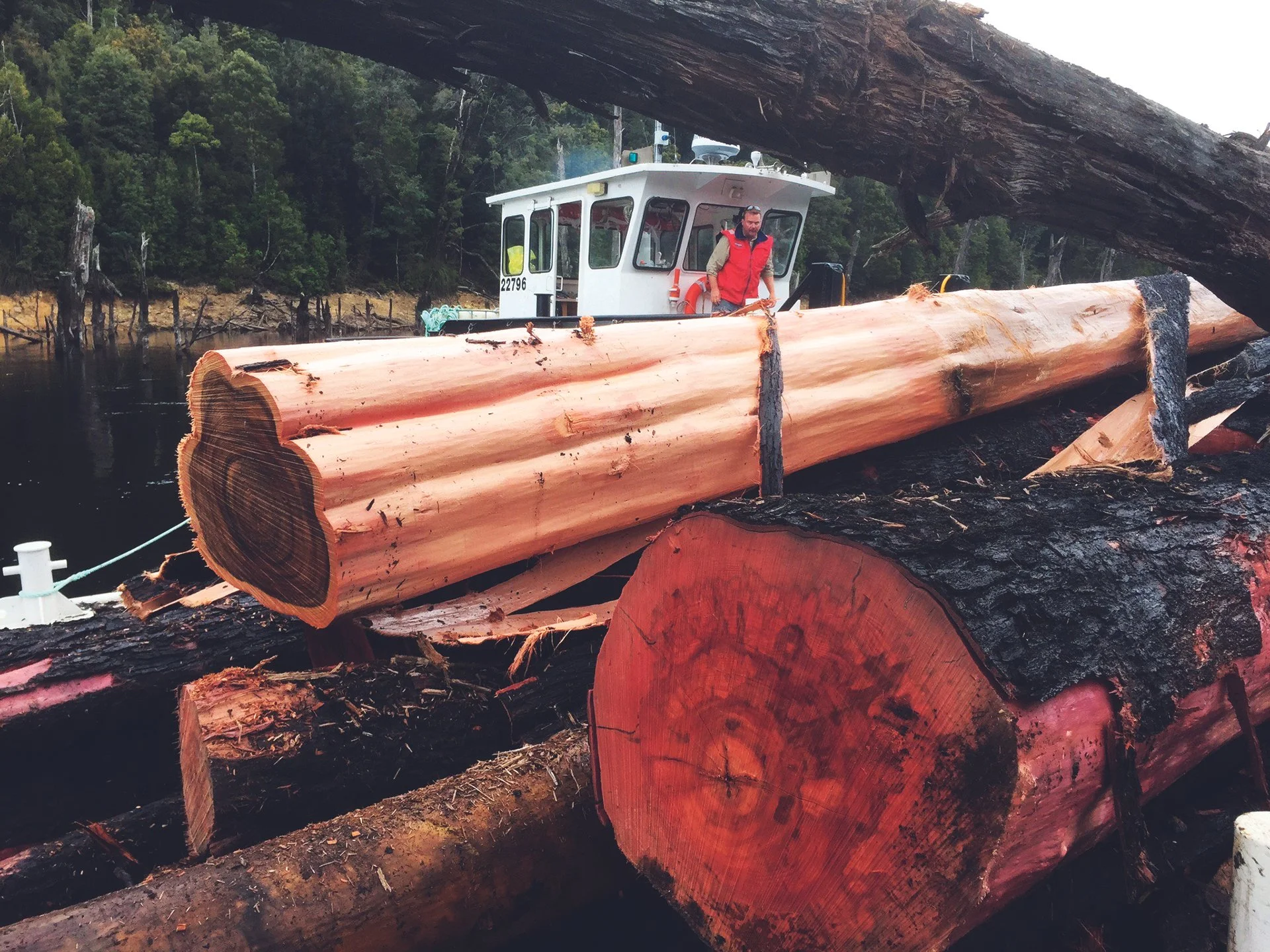
Specialty timbers being recovered from Lake Pieman by Hydrowood.
Why the Myrtle availability misconception exists
The belief that Myrtle is no longer commercially available did not come from nowhere.
Tasmania's special species timbers, including Myrtle, are not commodity timbers. They are distinctive, high-value species with unique growing conditions and a long history of use in architecture, joinery and fine furniture.
Sustainable Timber Tasmania recognises Myrtle as one of Tasmania's special species timbers, alongside blackwood, celery-top pine, sassafras and Huon pine.
Today, Myrtle continues to be supplied through a range of pathways. But as a premium specialty timber, it is generally less widely stocked than higher-volume commercial species. That has contributed to a perception among some architects, designers and builders that it is difficult to source.
In reality, "not everywhere" does not mean "not available."
One of those supply pathways is Hydrowood, which recovers premium Tasmanian Myrtle from forests submerged beneath Tasmania's hydro lakes decades ago. Hydrowood offers architects and designers another way to specify one of the state's most celebrated timbers, combining a unique provenance with commercial-grade supply for residential and large-scale projects.
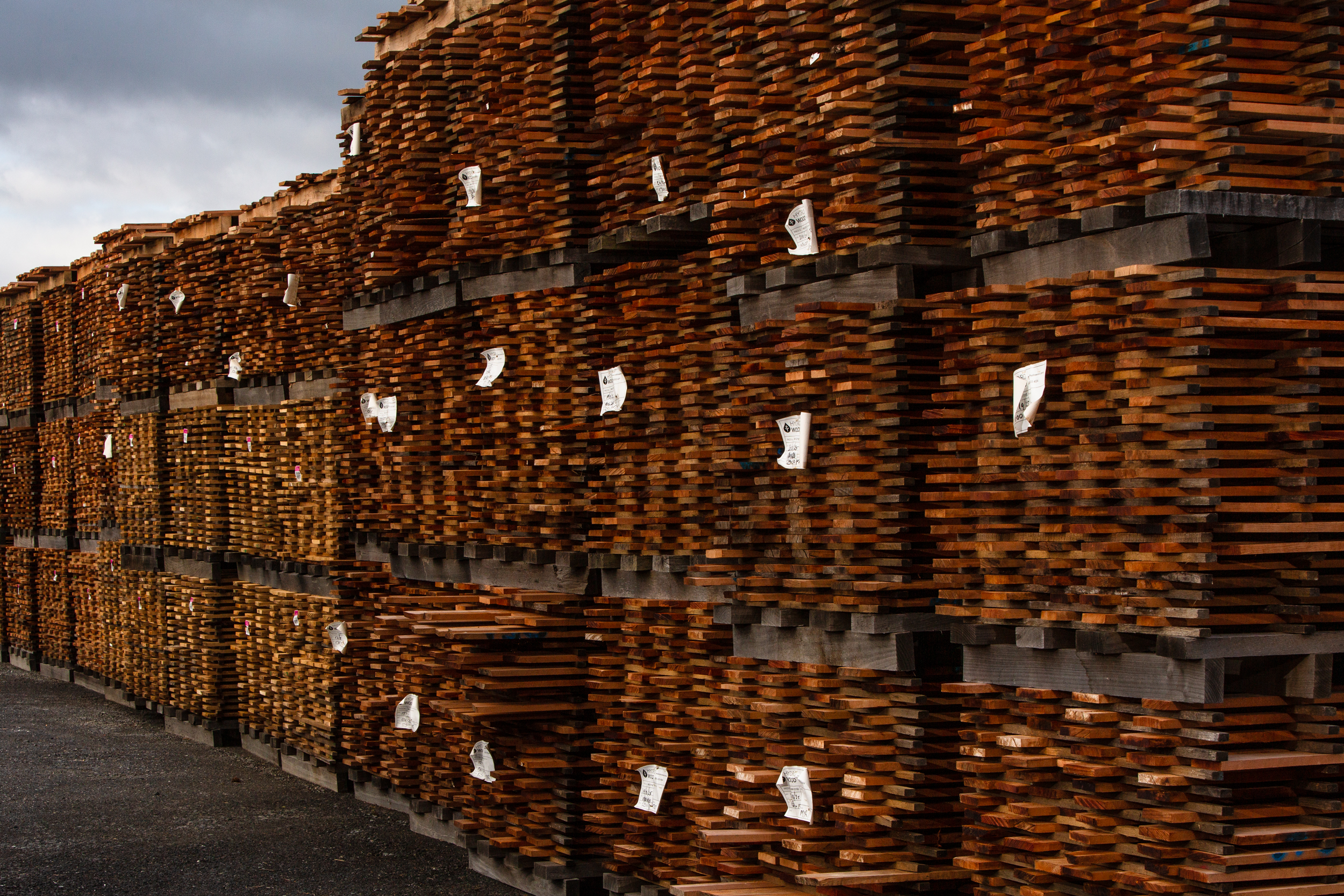
Myrtle timber in Hydrowood’s stock yard.
A Specialty timber with an established place in Tasmania’s industry
Tasmanian Myrtle remains recognised as one of Tasmania’s special species timbers, alongside blackwood, celery-top pine, sassafras and Huon pine.
It also remains one of the state’s most admired design timbers. Tasmanian Timber describes Myrtle as a striking timber used in high-quality furniture, joinery, cabinet-making, feature panelling and interior finishing details.
Myrtle remains part of Tasmania’s timber story, with a long history of use in design, craft, architecture and fine interiors.
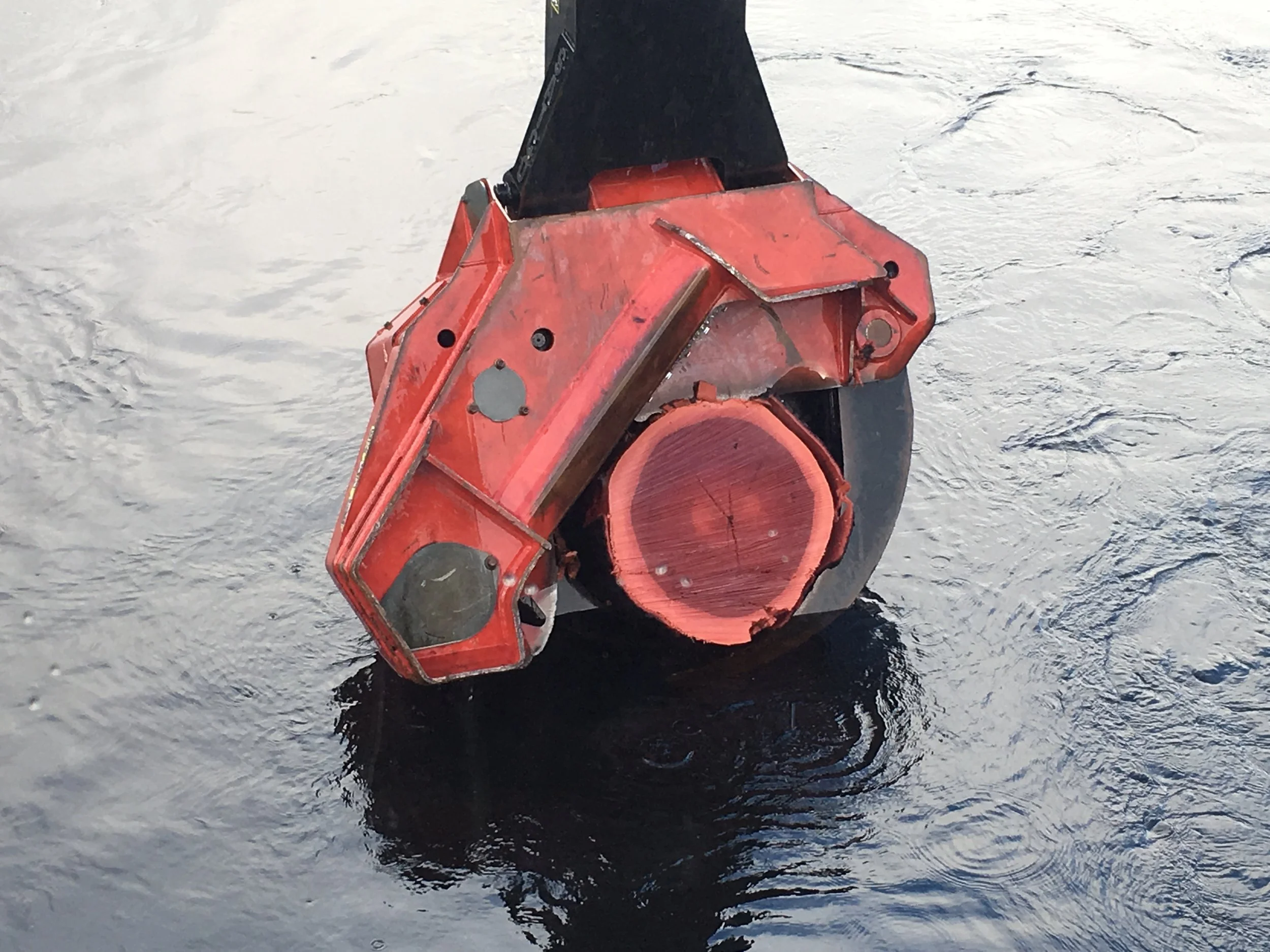
A Myrtle log being harvested from Lake Pieman on Tasmania's West Coast.
Hydrowood adds another pathway for commercial Myrtle timber supply
Hydrowood has helped change the conversation around Myrtle availability by recovering timber from forests submerged decades ago beneath Tasmania’s hydro lakes.
Rather than relying only on traditional supply pathways, Hydrowood Myrtle comes from long-submerged timber recovered from Lake Pieman and processed for contemporary architectural use.
That gives designers access to Myrtle with a remarkable provenance story, while also making it suitable for small to large-scale projects, including interiors, furniture, joinery, flooring, lining, veneers and commercial fitouts. Hydrowood lists Myrtle as available for national supply, including commercial volumes, linings and flooring.
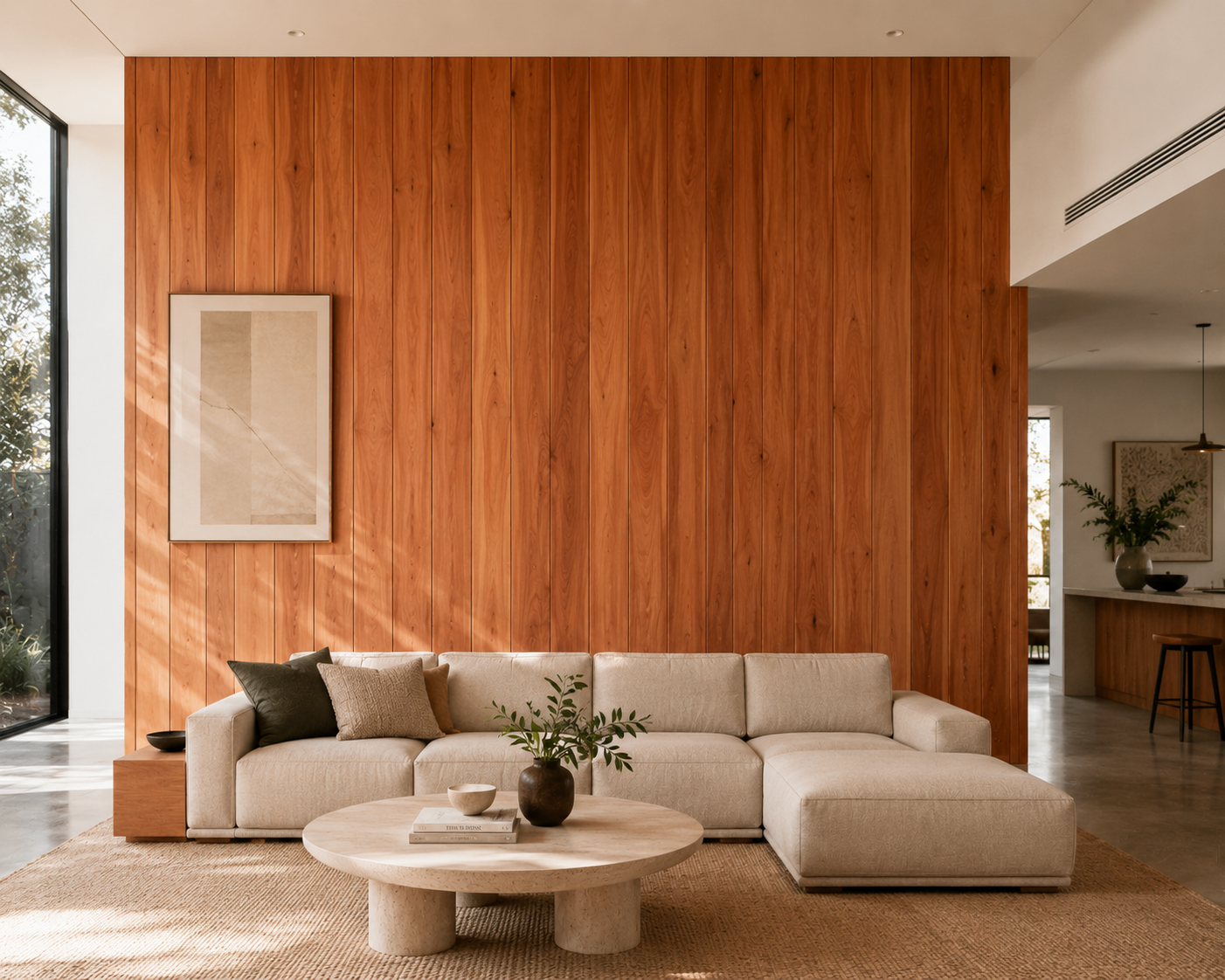
Tasmanian Myrtle brings warmth, texture and timeless character to interior linings.
Why Myrtle timber works so well as a design product
Hydrowood Myrtle’s appeal is not just its story. It is a beautiful design material in its own right.
Its colour can range from pale pink through to deep red-brown, with occasional wavy and fiddleback figure. It has a fine, even grain, strong finishing qualities and a warmth that feels distinctly Tasmanian.
The dense hardwood is suited to refined interiors, premium furniture, cabinetry, acoustic panelling, veneers and feature interiors. Its technical profile includes excellent workability for sawing, turning, moulding, sanding and coating, with a seasoned density of approximately 700 kg/m³ and a Janka hardness of 5.9kN.
For architects and designers, that combination is important.
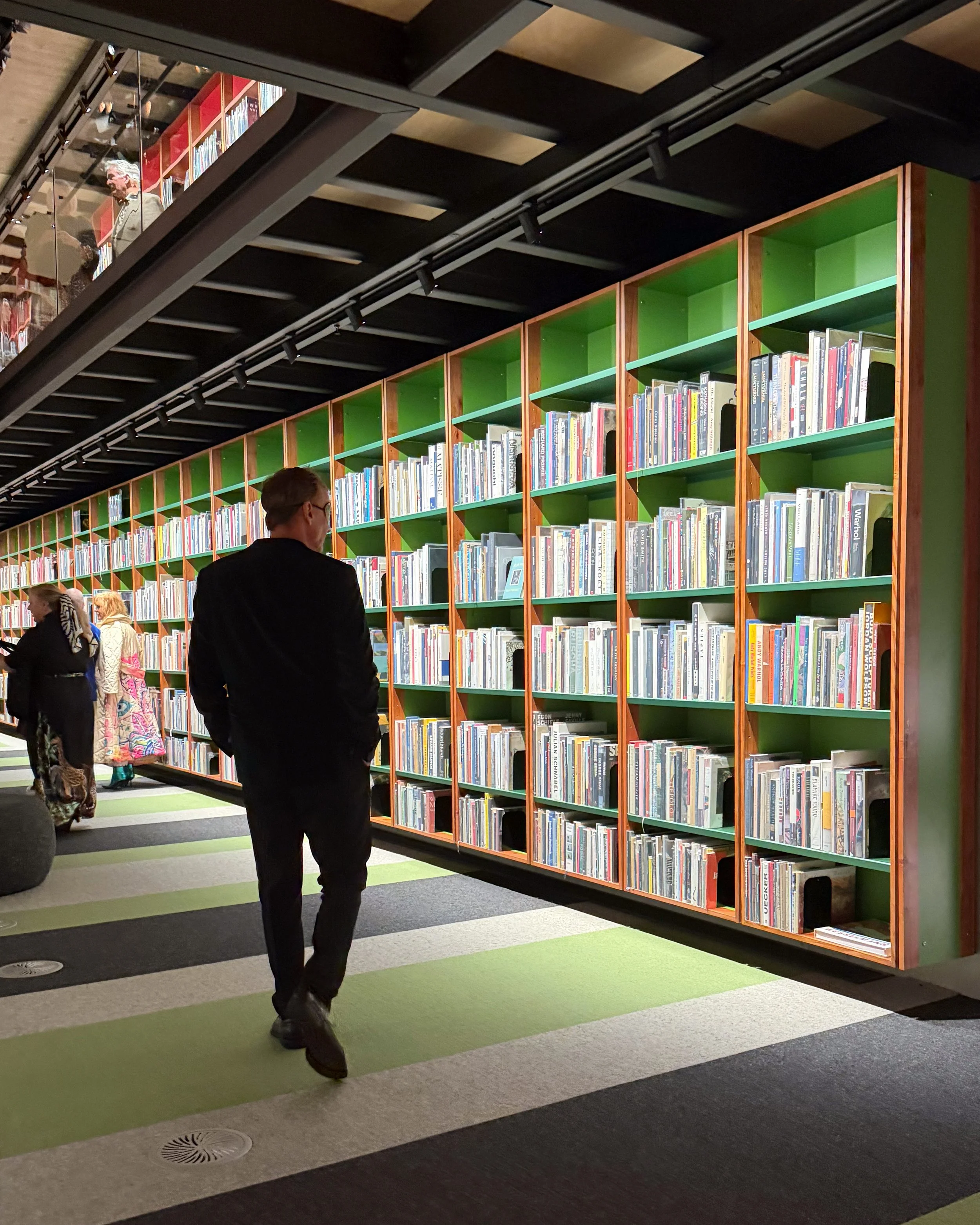
Hydrowood Myrtle used in the making of 287 book shelves by Halton Joinery.
The point for Australian timber specifiers
The question is not whether Tasmanian Myrtle still exists in the market.
The better question is: where is it coming from, how is it being processed and can the supplier support the scale, quality and documentation your project requires?
For design-led projects, Hydrowood Myrtle offers a clear answer, bringing together one of Tasmania’s most admired timbers, a unique reclaimed origin and a supply model built for contemporary architecture and interiors.
Myrtle has not disappeared.
It is being rediscovered.