
Project Spotlight: The Seed House by James Fitzpatrick
When a skilled architect is matched with soulful setting, and sustainable Tasmanian timber, the result is nothing short of a showstopper.
In The Seed House project, by Sydney architect James Fitzpatrick of Fitzpatrick + Partners, the design and build translated into a loving monument to reclaimed Tasmanian timber with Hydrowood Huon Pine, Blackwood and Celery Top Pine showcased throughout.
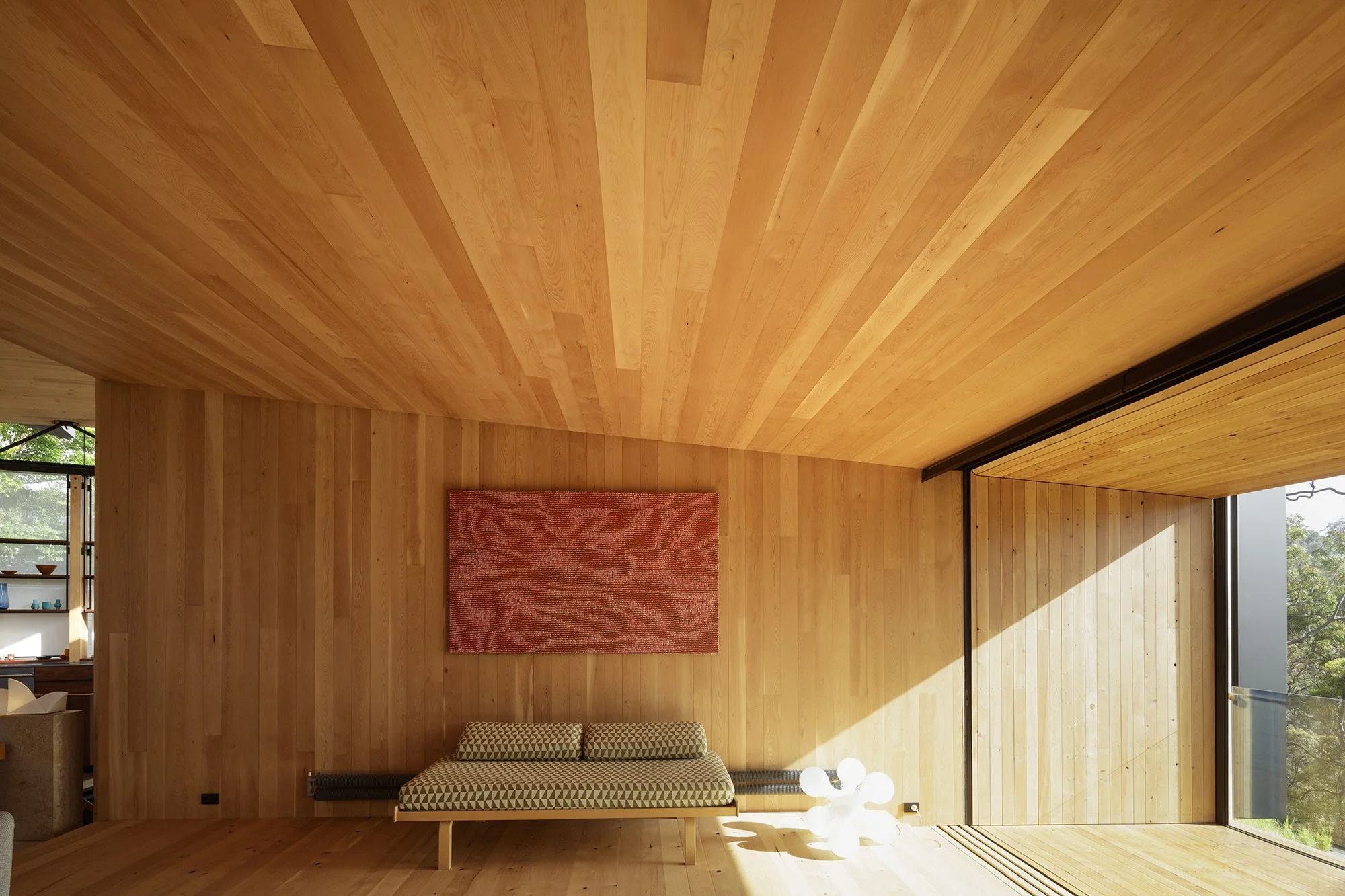
The Seed House by Fitzpatrick + Partners is a monument to Hydrowood. Picture: John Gollings
The Seed House on Sydney’s North Shore
With over three decades of experience in designing for Australian and Southeast Asian buildings, James Fitzpatrick, the founding partner of Fitzpatrick+Partners, embarked on The Seed House Project.
Completed in 2018, this new build was rooted to the surrounding natural environment of the lower North Shore. The site was encased with angophora trees, featured an elevated rocky terrain, and gazed across the blue salt waters of Middle Harbour.
The Seed House grew to become both a reflection and a gift to its elevated North Shore site, created from earthborn materials including stone and timber — inside and out.
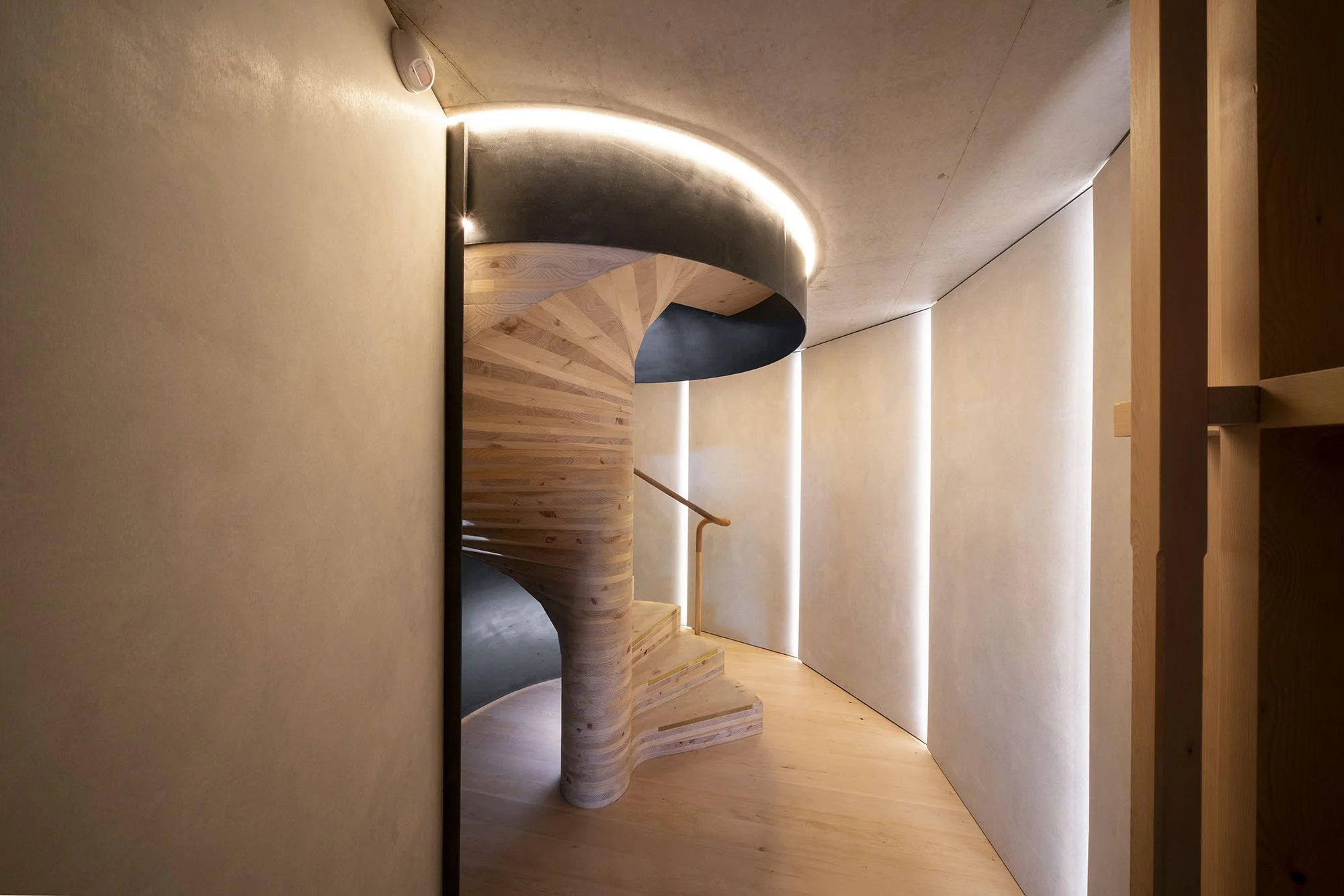
The three-story timber spiral staircase in the Seed House. Picture: John Gollings
Technology and Sustainability
While The Seed House was “an experiment in engineered timber, achieving a seamless connection to the environment”¹, the latest technologies were required to bring The Seed House to life.
The sculptural elements of the residence showcased the choice of materials, with every minor detail, including brackets and screws² , informing the overall aesthetic.
James Fitzpatrick told Tasmanian Timber that his admiration for Tasmanian timbers began long ago, as he grew his existing collection of Huon Pine to source Celery Top Pine and Blackwood from renewable sources.
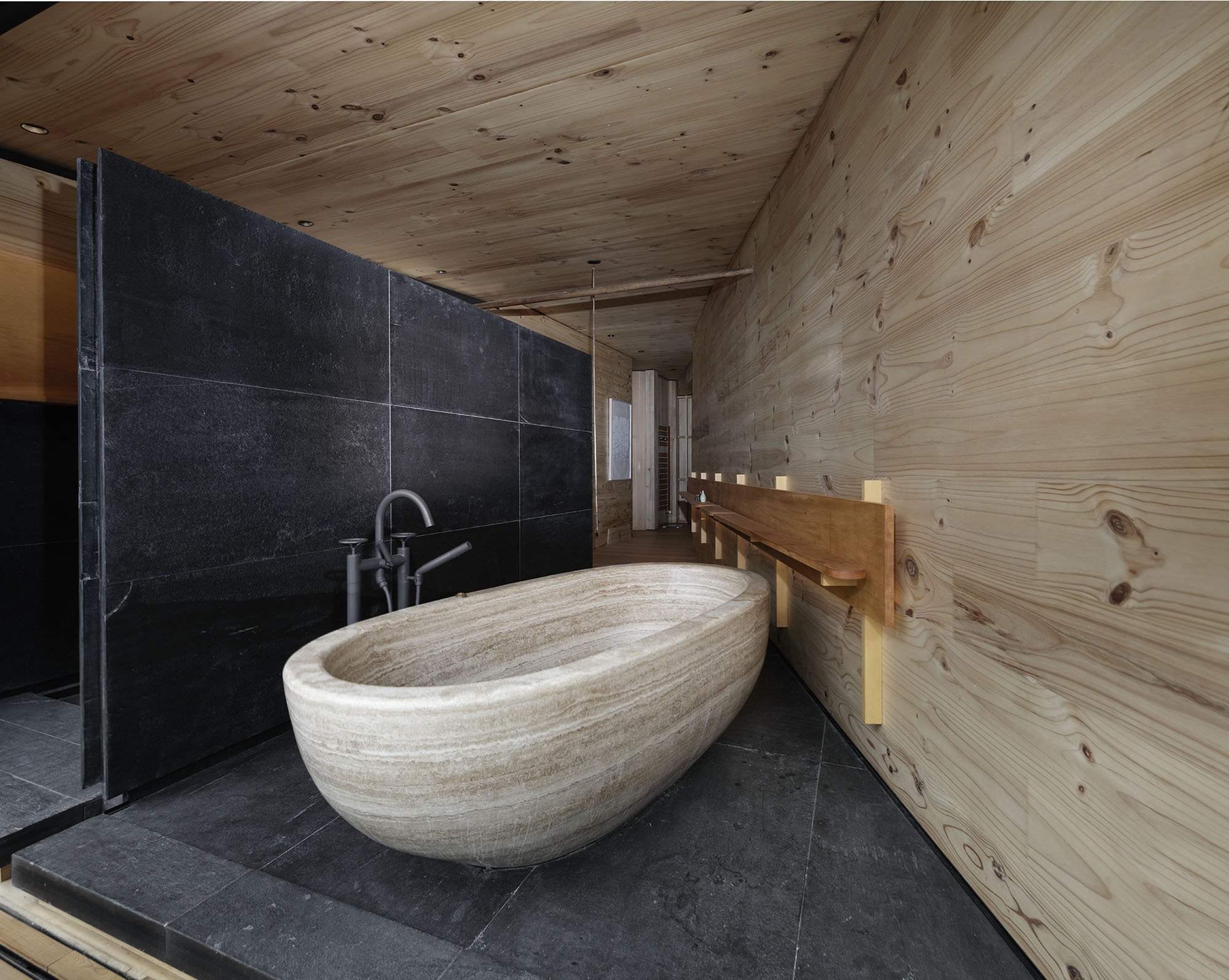
The solid timber bathtub in the Seed House. Picture: John Gollings
Sculptural Elements with Hydrowood Reclaimed Timber
With dramatic overhanging rooms, artful rock walls and foundations, black steel, expansive glass windows and wood features, the home is a soulful and sustainable design.
Hydrowood reclaimed Tasmanian timber can be seen throughout the residence, from timber walls that are lit to showcase the grain, to awe-inspiring curved staircases, bespoke doors, and seamless ceilings.
Standout features include a Tasmanian Blackwood kitchen with an expansive island bench, Huon Pine in the bath house for wall panelling and shelving, and Tasmanian Celery Top Pine structural columns.
“We quite often get asked why we used such a wide variety of Tasmanian timbers in the home and it comes back to my roots- being born in Tasmania, growing up and studying there.
It’s what I was surrounded with so using this timber is bringing part of that into a different environment and it’s bringing part of my history into the house.” — James Fitzpatrick, Fitpatrick+Partners – for Tasmanian Timber
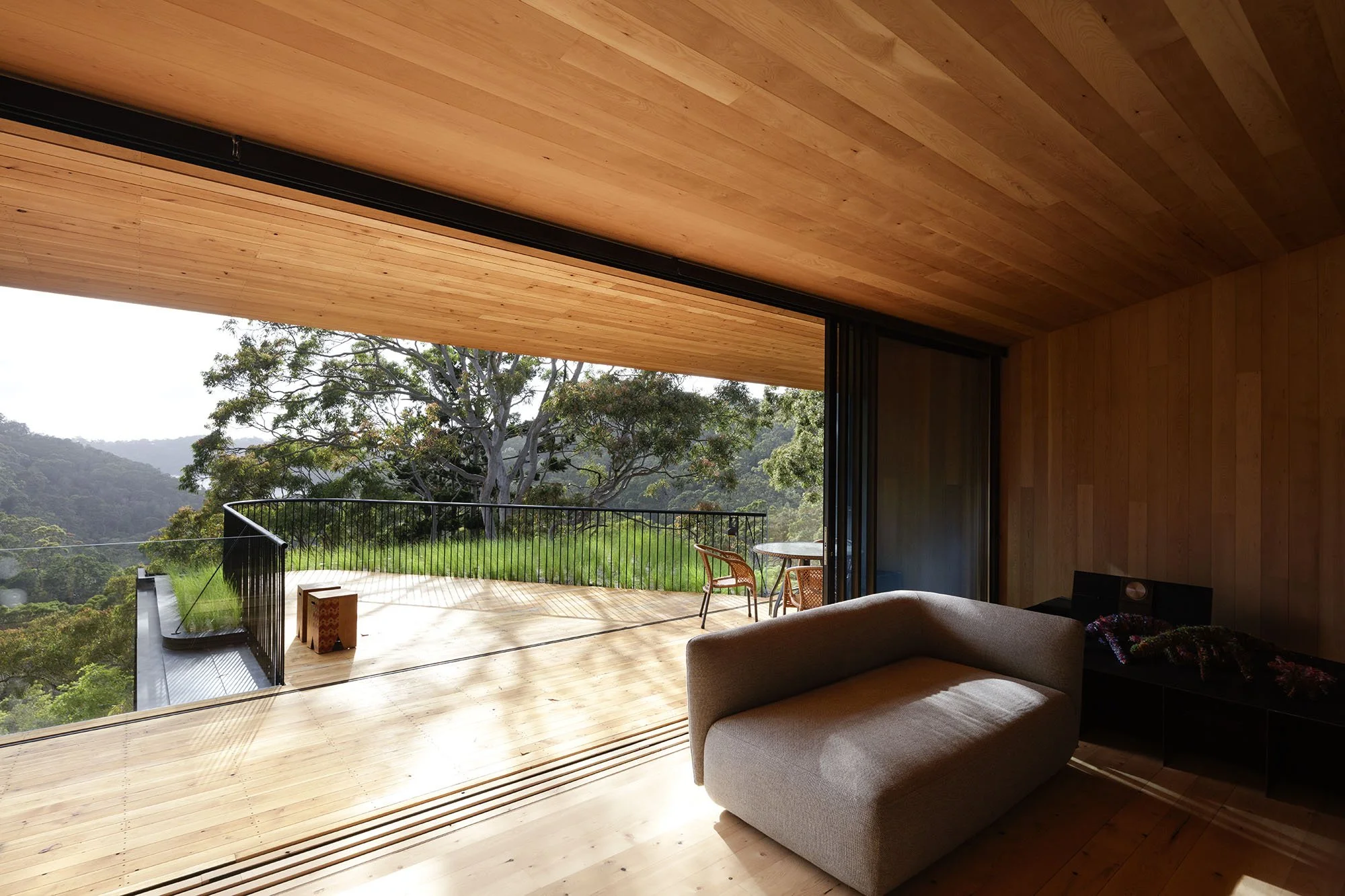
Timber is celebrated throughout the Seed House by Fitzpatrick + Partners. Picture: John Gollings
Timber Sustainability in Design
Sustainability is the story of the project, illustrating that there is a better way to create buildings, pleasing the environment, owners and community. The natural elements, such as the sustainable Tasmanian timbers of The Seed House, weave an artful story throughout the project that couldn’t be achieved with simply man-made materials.
The construction relied on structural cross-laminated timber panels, glulam columns, lining boards and joinery from Hydrowood and Britton Timbers. Furniture was also designed to work with the elements of The Seed House, to ensure the warm, cosy ambience in every part of the home.
"James Fitzpatrick's Seed House is my favourite project Hydrowood has been a part of,” explains Hydrowood CEO Neale Tomlin. “An iconic Sydney architect, born in Devonport, really embraced the Hydrowood story and the house is just a monument to timber."
Reclaimed Tasmanian Timbers for Architectural Projects
Some of the timbers used in the interior of the residence include Tasmanian reclaimed Blackwood, Huon Pine and Celery Top Pine and Radiata Pine from Hydrowood and Blackwood from Britton Timbers. This symphony of timbers has created a living artwork, a busy family home that is also a love letter to natural materials.
If you’re interested in working with sustainable Tasmanian timbers, please call 1300 031 088 or contact Hydrowood online to discover which timber species may be most suitable for your next project.
References
1 Living Built, Architecture Interior Design Sustainability
2 The Seed House, Fitzpatrick+Partners