
From Lake to Landmark: how Hydrowood became part of a tasmanian icon
On Hobart’s waterfront, few buildings are as instantly recognisable as Mures. For generations, the iconic seafood destination has been part of the city’s maritime identity, standing proudly on Victoria Dock as both a landmark and a reflection of Tasmania’s deep connection to the sea.
So when plans began for the Mures upper deck extension, every design and material decision carried weight.
Architect Mark Drury was tasked with designing a new upper-level restaurant, bar and function space, anchored by a distinctive corner tower housing a spiral stairwell and lift. But this was far more than a simple extension. It was an opportunity to create something that respected the legacy of Mures while introducing a bold new architectural feature that felt authentic to both the site and Tasmania itself.
That journey led him to Hydrowood.
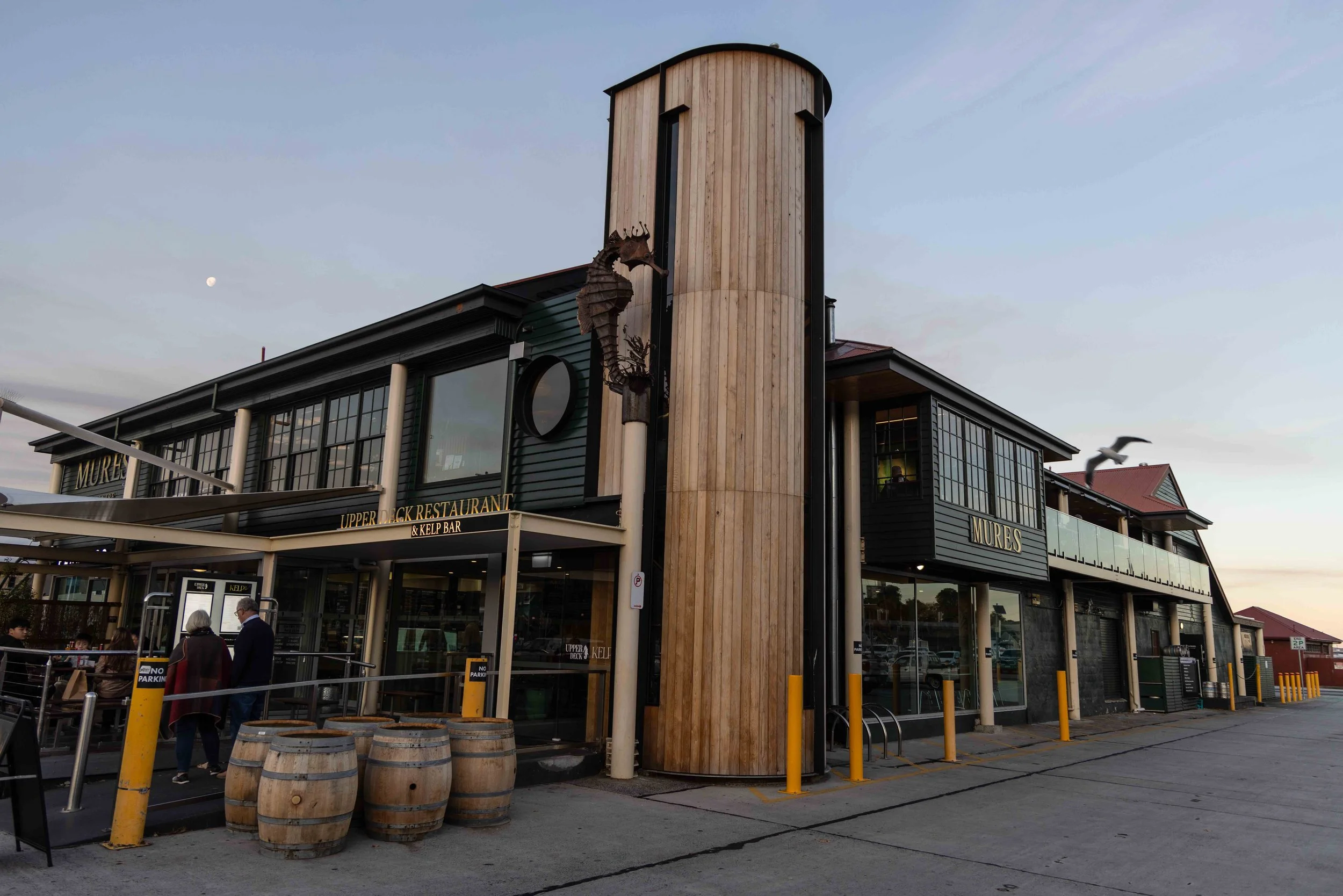
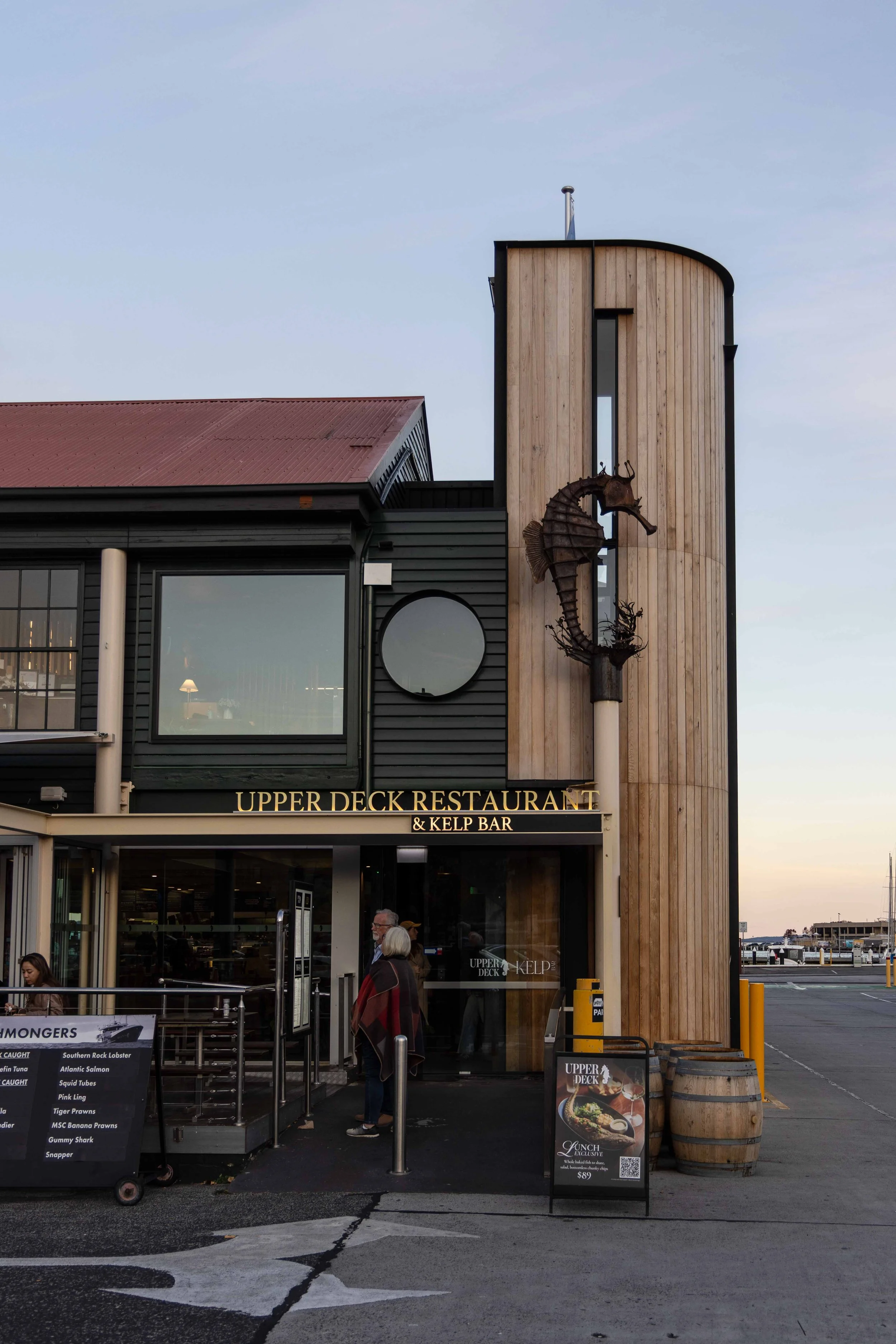
The Mures tower, designed by Hobart architect Mark Drury using Hydrowood Celery Top Pine. Picture. Patrick Gee
Designing for an Icon
Working on a landmark like Mures meant the project came with unique constraints.
Beyond its visual significance on Hobart’s waterfront, the building sits on a reclaimed wharf, meaning structural loading was critical. Space was also incredibly limited.
“There was only a little pocket area… probably about four-and-a-half to five metres by about three metres in area, which we had to build this thing in,” Mark explains. “We couldn’t encroach outside of their leased area, and we also had the issues with the loading onto the concrete wharf.”
Those physical limitations helped shape the design itself.
The curved tower form was driven by necessity. A cylindrical structure allowed the team to create a tight spiral stair within a compact footprint while also giving the building a strong visual identity.
“It’s almost like the clock tower of the building,” Mark says.
Placed prominently on the corner, the tower needed to feel deliberate, enduring and worthy of one of Hobart’s most iconic hospitality landmarks.
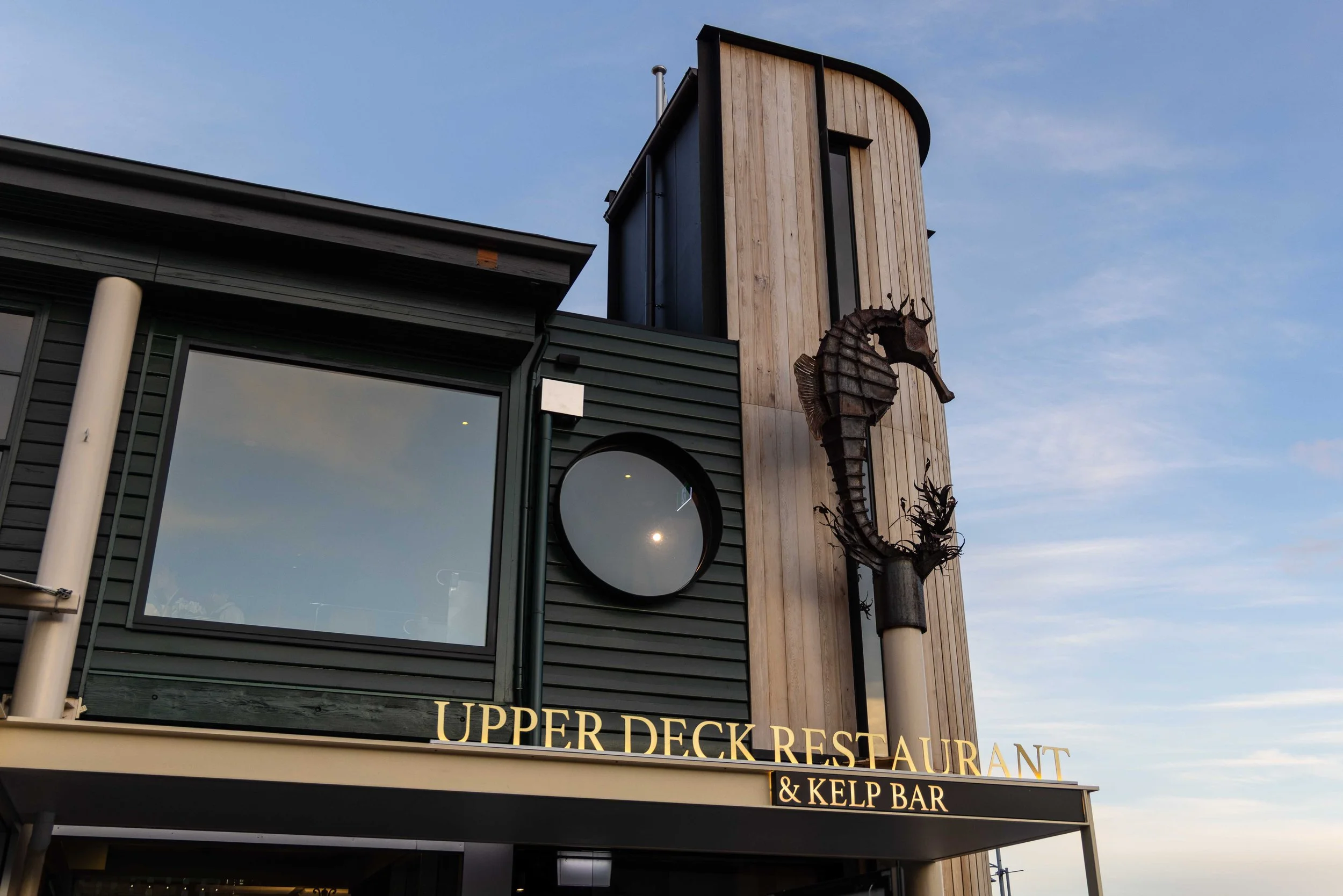
The Mures Upper Deck renovation was designed by Hobart architect Mark Drury.
Why Hydrowood?
From early in the process, Mark knew the material needed to carry meaning.
Rather than sourcing newly harvested timber, he wanted something reclaimed and rich with character.
“We wanted something of timber that was more sustainable, something that had either been old or reused,” he says.
That search led him to Hydrowood.
After learning about Hydrowood’s underwater forestry process, Mark travelled to Tasmania’s West Coast to see it firsthand, visiting the Lake Pieman operation and learning more about how the timber was recovered and processed.
“I wanted to see it for myself… it answered every question that I had. We were very keen to then use the product.”
That firsthand understanding gave confidence not only in the story behind the timber, but in its practical suitability for the project.
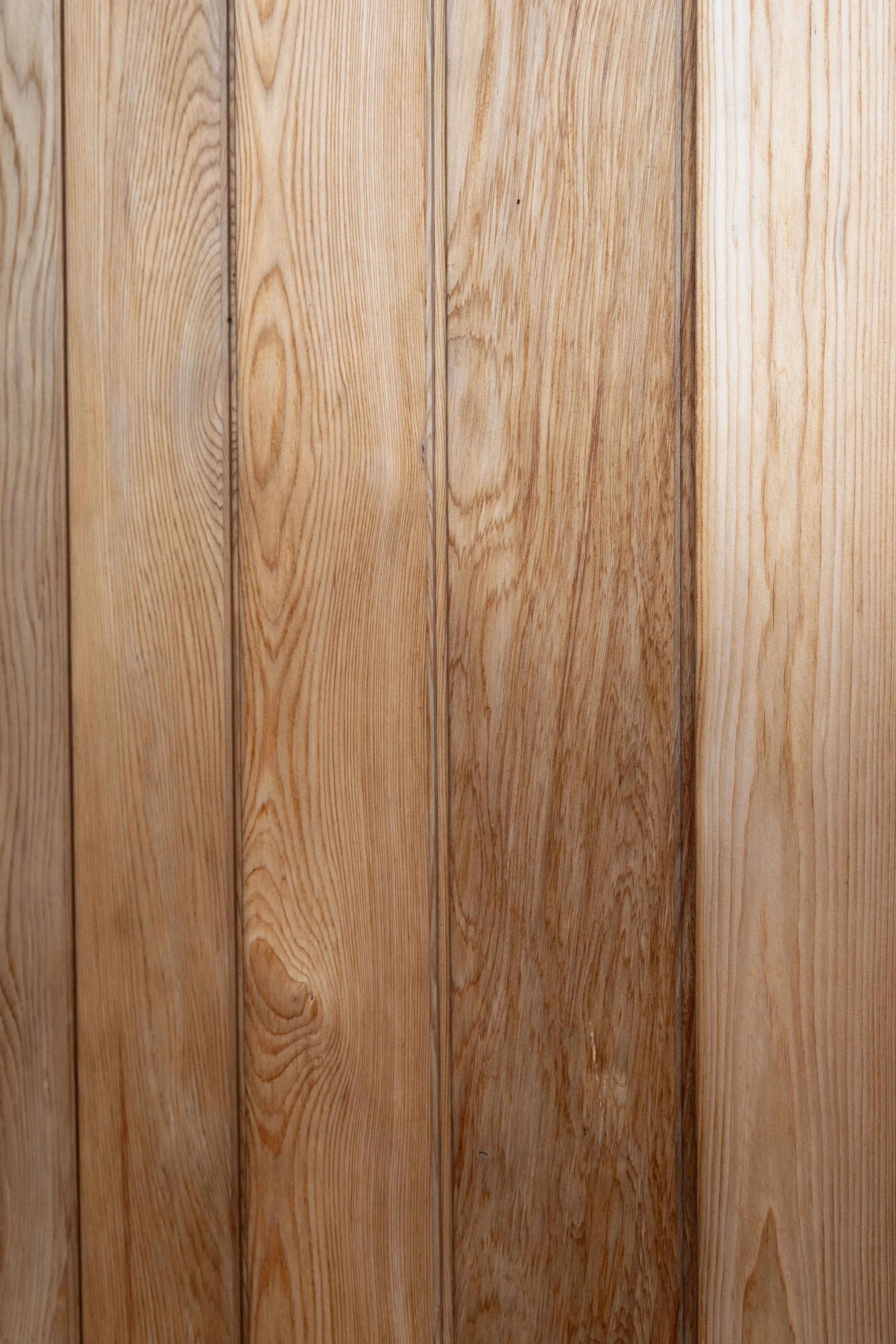
Hydrowood Celery Top Pine was used for the Mures Tower.
Why Celery Top Pine Was the Right Fit
The project centred around Hydrowood Celery Top Pine, a timber already familiar to Mark and the Mures team.
Mures had previously used reclaimed Celery Top Pine in another project, and there was already an appreciation for its visual warmth and connection to Tasmania’s maritime and boatbuilding heritage.
But aesthetics were only part of the equation.
Material selection on a project like this must balance:
Structural suitability
Durability
Stability
Weight considerations
Environmental impact
Long-term performance
Architectural intent
Hydrowood’s recovery and processing approach also offered confidence in the timber’s stability.
“If you cut a tree out of the forest, it’s got to go through a drying process,” Mark explains. “Celery Top Pine, when you’re cutting it green, takes quite a few years to dry properly… with this, we felt we had more guarantees on ending up with a stable product.”
For a curved external architectural element exposed to Tasmania’s coastal environment, stability mattered.
Reflecting the Philosophy of Mures
The choice of Hydrowood was also symbolic.
Mures has long been recognised for its strong connection to sustainable fishing, Tasmania’s waters and a deep respect for the environment. Mark wanted the tower to reflect that same philosophy.
“Mures are very much… sea to plate,” he says. “We wanted to carry a similar thing through as a signature part of the building.”
Rather than using a conventional cladding solution, reclaimed Tasmanian timber helped create a stronger connection between the building, the harbour and the story of responsible resource use.
Recovered, not harvested, Hydrowood aligned naturally with that thinking.
The material itself became part of the narrative.
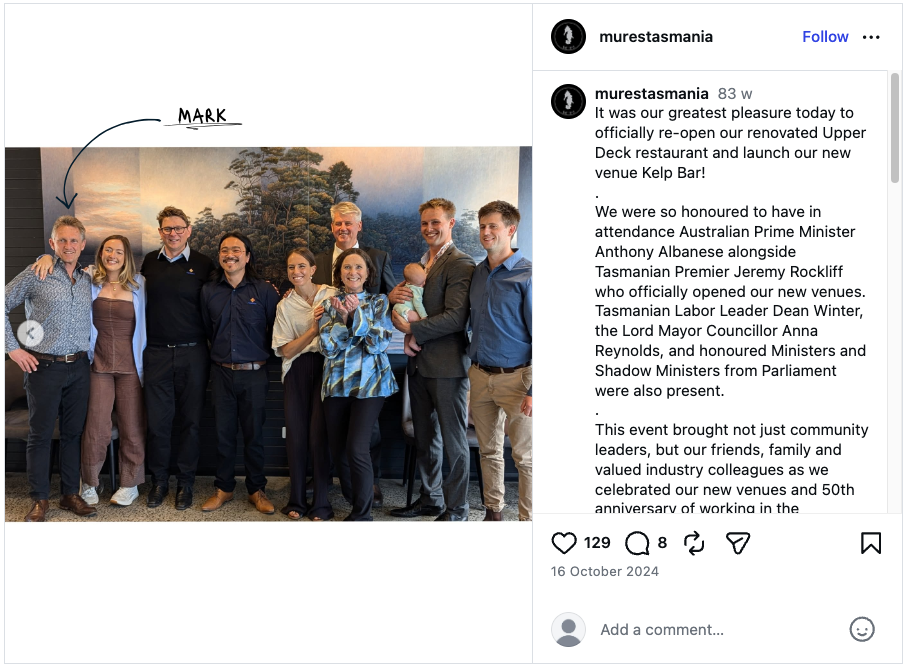
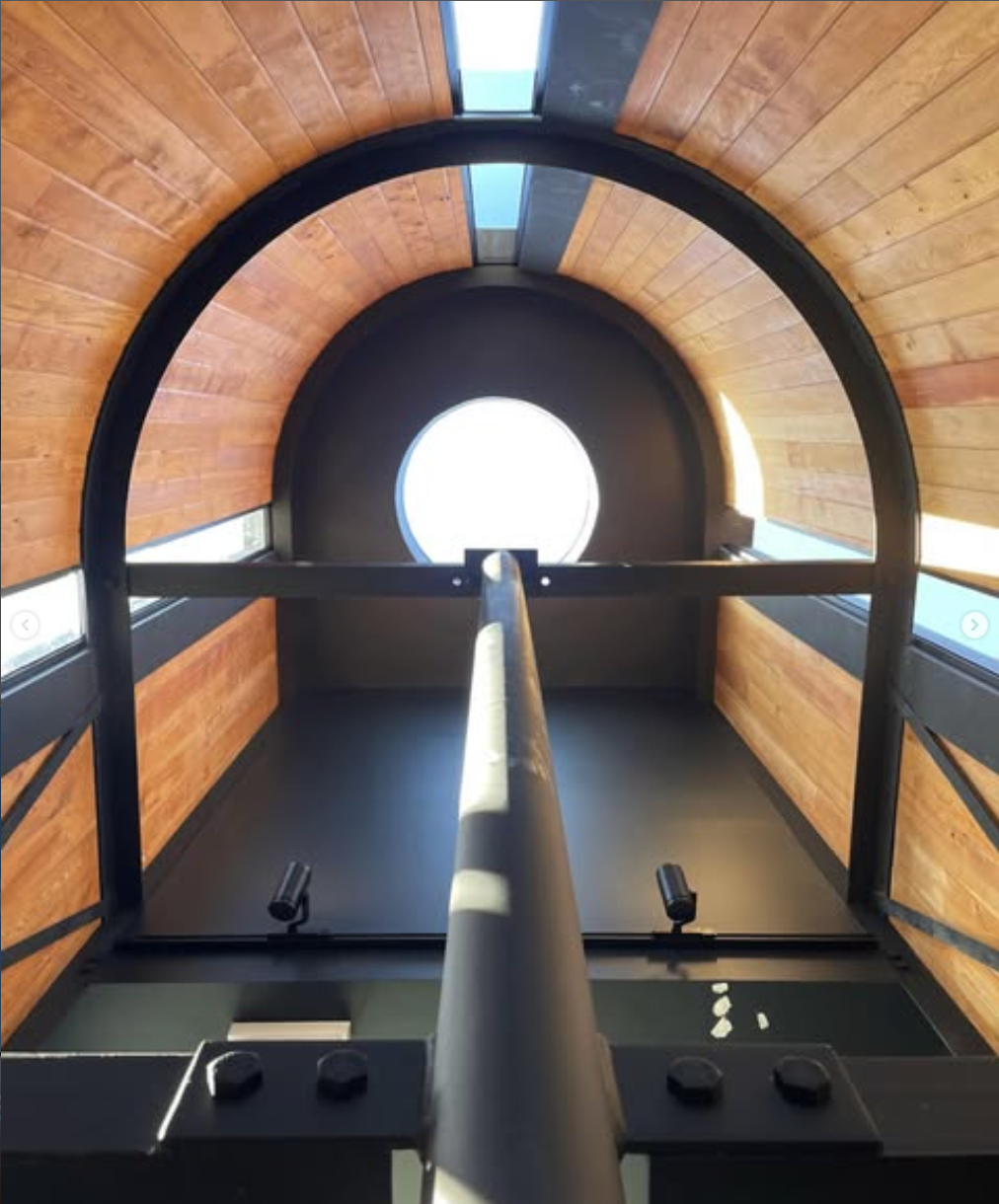
Inside the Mures tower. Credit: Mark Drury/Instagram
Architecture Inspired by Boats and Barrels
One of the most distinctive aspects of the tower is its curved timber form.
That wasn’t simply aesthetic.
The cylindrical shape responded to the tight site, but it also became an opportunity to create something deeply connected to place and craft.
Mark drew inspiration from maritime construction and cooperage.
“We wanted something that was like building a whisky barrel… or building a boat,” he says.
Rather than functioning like ordinary external cladding fixed to a hidden frame, the timber shell itself was intended to play a far more integral role.
Through prototyping and collaboration, Mark, Hydrowood and the joinery team developed a knuckle-joint concept that allowed the timber to follow the curved form while maintaining structural performance and weather protection.
The result is a feature that feels handcrafted, purposeful and architecturally distinct.
A Distinctly Tasmanian Outcome
For Mark, this project always felt rooted in Tasmania.
Mures is a Tasmanian institution. Hydrowood is a Tasmanian product. Celery Top Pine is a deeply recognisable Tasmanian timber.
“I think again, showcasing a Tasmanian timber in Celery Top Pine, but also a Tasmanian company that’s doing good stuff in Hydrowood, fitted the bill.”
That local connection mattered.
At a site so visible and culturally significant, authenticity could not be an afterthought.
Every design move, every engineering decision and every material selection needed to respect the history of the building while contributing something new.
Today, the Mures tower stands as more than an architectural extension.
It is a contemporary Tasmanian feature built from reclaimed Tasmanian timber, shaped by local craftsmanship, and designed to reflect the sustainability, heritage and maritime identity of one of Hobart’s most iconic waterfront landmarks.